Pentafluorobenzoic Acid: Its Role in Modern Chemistry
Historical Development
Pentafluorobenzoic acid entered the scene in the mid-1900s during a period of deep interest in fluorinated aromatic compounds. Chemists looked for new ways to enhance chemical stability and resistance to degradation, particularly for pharmaceuticals, crop protection, and advanced materials. Researchers realized that stacking a benzene ring with five fluorine atoms introduced reliable patterns, not just in chemical resilience but also in reactivity. Early syntheses used direct fluorination and nucleophilic aromatic substitution, giving rise to methods that shaped how fluorinated aromatics are made today. As more research confirmed the unique properties brought by fluorination, this compound started showing up in papers on drug design, agrochemicals, and advanced spectroscopy.
Product Overview
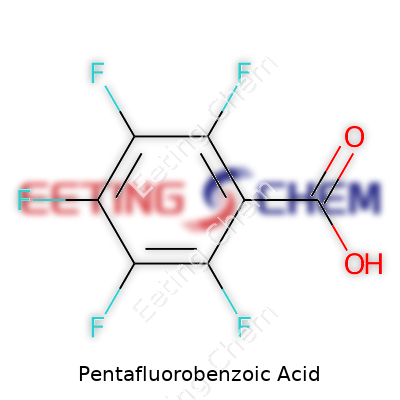
In plain terms, pentafluorobenzoic acid is a benzene ring with five fluorine atoms and a carboxylic acid group. Those five fluorine atoms line up at positions two, three, four, five, and six around the ring, squeezing high electronegativity into the molecule. This grants the compound stability and reactivity that's hard to find in non-fluorinated equivalents. Commercial suppliers have picked up on its value, making it available for everyone from pharmaceutical developers to academic labs. You might see it as a crystalline powder, usually white or almost colorless, ready to serve as a building block in more complex syntheses or as an analytical standard.
Physical & Chemical Properties
Pentafluorobenzoic acid carries a punch with its strong acidity compared to regular benzoic acid. The structure’s packed with fluorine, so it’s not just hydrophobic but also rather firm against both heat and oxidation. It typically melts around 185-190°C. The carboxyl group gives it some solubility in polar organic solvents, but in plain water the acid stirs in only a little before reaching its limits. The strong electron-withdrawing effect of the fluorine atoms pulls acidity higher; the pKa sits markedly lower than benzoic acid’s 4.2—often falling in the 1 to 1.5 range. With so many fluorine groups, even standard proton NMR isn’t useful here. Instead, chemists rely on 19F NMR and IR techniques for routine analysis, which says something about the specialized attention this compound receives.
Technical Specifications & Labeling
Lab bottles show pentafluorobenzoic acid’s CAS number and molecular formula: C7HF5O2. Technical details list purity levels (commonly above 98%), melting point, and lot-specific moisture content. These notes matter for researchers, especially in analytical chemistry, where even small impurities or trace water can throw off results. Suppliers often provide material safety data sheets, emphasizing careful storage in tightly sealed containers—moisture-sensitive, light-protected. Standard packaging comes in glass amber bottles, with hazard symbols clear for both transport and day-to-day handling.
Preparation Method
Preparing pentafluorobenzoic acid usually takes a two-step path. First, chemists craft pentafluorobenzonitrile by direct fluorination or a nucleophilic aromatic substitution on pentachlorobenzonitrile. Acid hydrolysis then transforms the nitrile group into a carboxylic acid. This method avoids nasty side reactions that pop up if you try to introduce the acid group after full fluorination. Alternative methods include oxidative approaches, but these can drive up costs or waste, so in practice, most labs stick with tried-and-true substitution and hydrolysis. Each batch gets tested for residual starting material and yield, since unreacted precursors or over-fluorinated byproducts can lower the quality of the final acid.
Chemical Reactions & Modifications
Pentafluorobenzoic acid serves as a workhorse for further chemical tweaking. Its high reactivity owes a lot to those electron-hungry fluorine atoms, which steer substitution to predictable positions and next-step coupling reactions. Making acid derivatives like esters or amides turns out to be quite straightforward—classic Fischer esterification or amide bond formation gets the job done fast. The compound also acts as a source for pentafluorobenzoyl chloride (a handy acylating agent). Metalation at certain positions allows researchers to swap in groups like alkyls or aryls, creating new compounds with further specialized uses. Nucleophilic aromatic substitution opens doors for creative ligand design and functional group swapping, building up the range of possible derivatives for advanced research.
Synonyms & Product Names
Different catalogs and chemical references list pentafluorobenzoic acid with several names, so it’s important to cross-check. You might see “2,3,4,5,6-pentafluorobenzoic acid”, “perfluorobenzoic acid”, or even “PFB acid.” The chemical community recognizes its systematic and short forms, and these synonyms appear in chemical inventories, safety databases, and regulatory filings, streamlining international communication and procurement.
Safety & Operational Standards
This acid deserves respect at the bench. Lab safety rules call for gloves and goggles, and clean work with a fume hood. Skin or eye contact may trigger irritation—those five fluorines don’t just boost reactivity, they also bring harsher direct effects. Its strong acidity also raises the risk of respiratory irritation if inhaled as dust or vapor, so nobody should handle it in confined spaces without local exhaust ventilation. Waste treatment follows standard hazardous organic acid protocols, neutralizing before disposal and using certified hazardous waste facilities. Labeling must clearly state hazard class and storage precautions, since improper handling can lead to costly incidents ranging from accidental spills to health hazards for researchers.
Application Area
Academia and industry both keep pentafluorobenzoic acid on their shortlists. In research settings, it serves as an internal standard for 19F NMR studies—offering sharp, reliable signals that help quantify or track fluorinated molecules. Environmental chemists sometimes use this acid as a tracer in groundwater movement studies, where the fluorine atoms' distinctiveness helps track transport and dispersion. Its role in organic synthesis goes beyond simple acid functionality: introducing a whole ring packed with fluorine into candidate molecules helps drug discovery teams test stability, boost bioactivity, and resist metabolic breakdown. Agrochemical developers value the acid’s reactivity in coupling, giving rise to novel herbicides or fungicides with better performance and environmental stability. Polymer chemists lean on derivatives for unique surface coatings and advanced material design, since that high fluorine content translates to chemical resistance and non-stick properties.
Research & Development
The R&D community keeps finding new value in pentafluorobenzoic acid. Medicinal chemists explore it while searching for new scaffolds or metabolic profiles, particularly in cancer and inflammation studies. Its use in tagging or labeling makes it a top choice for tracking molecules through biological systems or environmental pathways. Recent efforts also push the boundaries of catalysis, where pentafluorobenzoic acid and its derivatives anchor ligands or serve as directing groups for metal-catalyzed transformations. Custom modifications of the acid unlock novel functions, giving synthetic chemists a launchpad for testing chemical hypotheses or creating new product candidates. Every time a new fluorination strategy appears in the literature, researchers check if this compound or its derivatives can play a starring role.
Toxicity Research
Extensive research into toxicity shows that pentafluorobenzoic acid, like many aromatic carboxylic acids, can irritate mucous membranes and skin, with repeated or high-dose exposure raising red flags for potential organ impacts. Animal studies report that the compound clears from the body fairly quickly, but prolonged or excessive ingestion may affect liver and kidney function. Environmental fate studies show the acid doesn't degrade easily; its persistence calls for care during disposal and accidental releases, as bioaccumulation in soil or water could stress local ecosystems. Regulatory agencies in Europe and North America have flagged it as a “substance of concern” under certain strict usage contexts, so compliance with waste, transport, and workplace safety laws isn’t just best practice—it's a legal requirement.
Future Prospects
Looking forward, pentafluorobenzoic acid’s prospects tie closely to advances in sustainable fluorination processes and new applications in material science and medicine. Eco-friendlier synthesis routes, such as selective electrochemical fluorination or biocatalyzed modifications, could reduce hazardous waste and lower production costs. The demand for stable, high-performance fluorinated intermediates should only grow as more sectors—from smart coatings to medical diagnostics—rely on chemical innovation. Cutting-edge drug design continues to borrow from fluorine chemistry’s toolbox, and pentafluorobenzoic acid often stands in as a reliable test case or launching point. Future research efforts aim to expand desirable properties, tighten green chemistry practices, and explore untapped biological roles—giving this storied molecule new room to grow in both familiar and surprising directions.
Behind the Name: The Role in Chemistry Labs
I remember seeing a bottle of pentafluorobenzoic acid for the first time in a university lab. Most people haven’t heard of it, but chemists know its value. In practical terms, this compound stands out as a marker or “tracer” in a range of lab testing. Researchers use it in water analysis, especially when they want to track how chemicals move through soil or groundwater. Its unique structure—five fluorine atoms clinging to a benzene ring—makes it easy to spot by sensitive machines like HPLC (high-performance liquid chromatography).
Why Tracing Matters
Tracking chemicals through complex systems helps scientists sort out contamination problems. Pentafluorobenzoic acid doesn’t occur in nature, so its presence always means a researcher added it. Since it doesn’t break down under most lab or environmental conditions, it stays put long enough to give clear tracing results. This quality actually saves people money and time on analysis. The U.S. Geological Survey, for example, lists pentafluorobenzoic acid as a recommended tracer for water studies. Contractors testing polluted sites also trust it because it delivers honest data about where water or chemicals go after a spill.
Beyond Water Tracking—Extra Uses in Synthesis
Pentafluorobenzoic acid isn’t only about water science. Synthetic chemists pick it as a handy building block. The acid group and heavy fluorine load change the behavior of molecules that carry it. This property helps when scientists want to create advanced materials—things like specialized plastics or targeted drugs. Medicinal chemists appreciate how the addition of fluorines changes the shape and activity of possible treatments. Many experimental drugs tested against cancer or viral infections, for instance, had their structure fine-tuned with small pieces that look like pentafluorobenzoic acid.
Industry, Safety, and Health
Every time someone asks me about safety, I stress real experience. Pentafluorobenzoic acid isn’t found in the food chain, and it doesn’t tend to move into plants or animals. Still, like many strong acids, anyone handling it uses gloves and goggles. Spills are rare, and you’ll likely find it locked in small laboratory cabinets, not sitting on warehouse shelves for the public to buy. Its main risk: irritation if people breathe dust or get it on skin. Thankfully, labs regulate its use tightly, and chemical suppliers include full safety information.
Chemical supply companies keep strict records and only sell to verified buyers, reducing the risk of environmental leaks. Regulators also watch for accidental releases, so officials act quickly to avoid pollution. As a result, pentafluorobenzoic acid stays where it belongs: in well-monitored research.
Reliable Science Needs Tools Like This
Whenever people discuss environmental cleanup or smart drug development, I think of compounds like pentafluorobenzoic acid. They may not sound glamorous, but their starring role in research keeps wrongdoers honest and protects public health. We need these tracers and building blocks if we’re going to fix old pollution messes or design the next wave of medicines. Using them responsibly is not negotiable, and with experienced hands, real progress gets made.
Real-World Storage Needs for Pentafluorobenzoic Acid
Ask any lab tech who’s handled Pentafluorobenzoic Acid, and you’ll hear the same thing: treat it with a careful hand. This compound looks straightforward on paper, yet mishandling it introduces headaches most people would rather avoid. I’ve seen plenty of labs where strong acids end up with labels half-peeled or containers packed onto overcrowded shelves. The reality is simpler than folks think. Proper storage just means respecting the nature of this acid and understanding why cutting corners is a bad idea.
Best Storage Practices
Pentafluorobenzoic Acid has a habit of pulling in moisture from the air. Sealing the bottle tight matters every time. I never store it in containers with a worn gasket or faulty cap. Any loose seal invites clumping, possible degradation, and headaches when running quantitation checks. Polyethylene bottles or Teflon-lined lids keep things dry—no need to get fancy, just practical choices that resist both the acid and the elements around the lab.
Cool temperatures work best, ideally below 25°C or room temperature. Sunbeams from a window or heat from a steam pipe chip away at this compound’s integrity. On a hot day, I check the spot before shelving and swap out to a cooler section if possible. Walk-in refrigerators aren’t needed, but a dry, shaded cabinet drops the risk of slow hydrolysis or decomposition. Humidity wreaks its own havoc, so low-moisture spaces—think desiccators or cabinets with silica gel packs—make a world of difference.
Safety Concerns Everyone Ignores Until It’s Too Late
I’ve seen burnt fingers and melting gloves from spilled strong acids a dozen times. Pentafluorobenzoic Acid won’t burn skin like sulfuric, yet long exposure isn’t safe either. Stashing the bottle away from flammable solvents or food storage fridges may seem obvious but gets missed in shared spaces. Clear hazard labels and keeping acids together, away from incompatible reactants like amines or strong bases, prevent bad mixing and expensive cleanup. I slap secondary containment trays under acid shelves. It might cost a few dollars, but in case of a spill, that tray keeps leaks away from sensitive instruments or papers.
Supporting Claims with Industry and Regulatory Guidance
Reputable chemical suppliers like Sigma-Aldrich and Alfa Aesar echo these guidelines: store Pentafluorobenzoic Acid in tightly closed containers, at room temperature, in a dry, well-ventilated place. The U.S. National Institutes of Health echoes these points in their documentation. The American Chemical Society and OSHA both stress hazard labeling and separation from incompatible materials as standard laboratory safety. I lean on these sources for training new staff because lived experience proves their value—labs that follow the book don’t suffer from surprise accidents or mysteriously empty short-lived stock.
Solutions to Common Storage Problems
Speaking as someone who’s restocked or tossed degraded chemicals, I believe in labeling open dates on every bottle. This simple act goes a long way. If there’s moisture, swap out desiccants and inspect seals regularly. Encouraging a culture of clean storage means everyone checks shelving for leaks or overstock. For anyone unsure, manufacturers provide Safety Data Sheets packed with these details—no need to guess how to maintain potency or security for Pentafluorobenzoic Acid. Just giving staff five minutes of training each month on storage saves time, money, and keeps the doors open for the next big experiment.
What is Pentafluorobenzoic Acid?
Pentafluorobenzoic acid stands out in a lab for its sharp, chemical smell and white crystalline form. The structure packs five fluorine atoms onto a benzene ring, so this isn’t your typical benzoic acid. Chemists reach for it because it has strong electron-withdrawing powers, making it handy for analytical work. It helps labs manage quality control and build reference libraries in environmental science.
Is It Really Toxic?
People naturally want to know if this chemical is dangerous. The research on pentafluorobenzoic acid itself feels thin, at least compared to many industrial chemicals. You won’t find government advisories laying out occupational exposure levels. I’ve mixed it myself in a university lab, a lab where the fumes usually say more about hazard than any label. The bottle held all the warning symbols—exclamation mark, corrosive, environmental hazard—but we suited up and ran the fume hood, following the same rules as for many organic acids.
The real snag with pentafluorobenzoic acid comes from those five fluorines. Fluorinated organic compounds act tough—they resist breaking down in the environment and sometimes build up in water and living things. EPA calls this persistence a “forever chemicals” problem. PFAS (per- and polyfluoroalkyl substances) like these link to developmental, immune, and possible cancer risks at low doses over time. No one has singled out pentafluorobenzoic acid for those risks in humans, but its family history doesn’t inspire trust.
Looking at how it feels on the body, you’ll find limited data. Handling it unprotected may irritate the skin or eyes, just like many acids. Swallowing or breathing dust causes discomfort, nausea, or worse at high exposure. Any symptoms will probably come from messing with acids and strong organics, not from one-off casual contact. Long-term risks strike me as more worrying because of its chemical stability—these molecules don’t leave the body or the soil easily.
Safer Handling and Solutions
My own approach with compounds like this always starts with ventilation and gloves. Labs dealing with fluorinated organics pay attention to limiting dust, keeping spills contained and treated with neutralizing agents, and tagging every waste bottle with a clear label. Incinerating these substances at high temperature beats dumping or washing them away since water purification plants can’t break down that many fluorines at once.
Manufacturers and research labs sometimes look for alternatives. Green chemistry offers a path—substituting less persistent molecules or using processes that don’t require heavy fluorination. I like what I see with new catalysts and processes that cut down on the fluorine burden, even if it takes longer to get them mainstream. Until those options spread, education stays crucial. Teams need to know that even tiny-scale experiments create residues that last far beyond the experiment itself.
Weighing the Impact
Chemistry always walks a line—powerful tools, real risks. No one eats, drinks, or sprays pentafluorobenzoic acid around, but its chemical toughness raises questions about long-term environmental and health effects. Scientists, regulators, and the rest of us keep learning as data rolls in. For now, the smartest move comes from respecting the hazard symbols, staying curious, and pushing chemical innovation to deliver safer, cleaner options.
Digging Into the Molecule
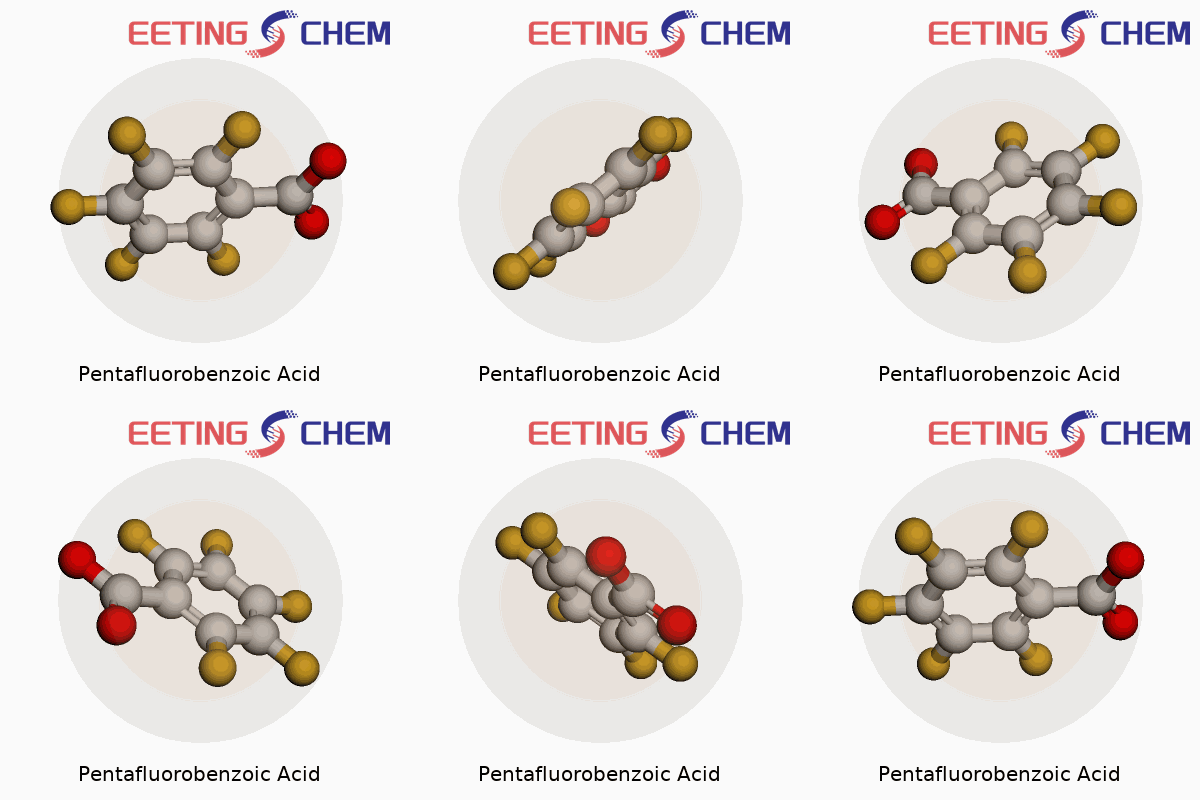
Pentafluorobenzoic acid doesn’t show up on grocery store shelves or in household products, but anyone who’s spent time in a laboratory has probably run into its distinct name on a datasheet. The structure is simple to picture if you know benzoic acid—a benzene ring with a carboxylic acid (-COOH) sticking out. In pentafluorobenzoic acid, five hydrogen atoms on the benzene ring are switched for fluorine atoms. The chemical formula sums up as C7HF5O2, or more commonly written as C6F5COOH.
Each fluorine atom latches onto a unique carbon on the ring, crowding out the usual hydrogen atoms. The presence of these five electronegative fluorines hands this compound some stubborn properties, like impressive chemical stability and a straightforward, predictable reactivity. You won’t find it reacting with water under normal conditions or breaking down easily in the environment. That kind of resilience is both a blessing and a potential concern, depending on where and how it gets used.
Why Fluorine Substitution Matters
Experience in the lab tells the whole story. Swapping hydrogens with fluorines changes nearly every property of the aromatic ring. Pentafluorobenzoic acid does not act like regular benzoic acid. The acid strength jumps up—around a pKa of 1.5, compared to the 4.2 for benzoic acid without fluorines. You can thank those hungry-for-electrons fluorines for pulling charge out of the ring and making that carboxylic acid group even more likely to drop its proton in water. In plain terms, this means you get stronger acidity and altered solubility, which influences reactivity in synthesis and separation steps. No wonder chemists reach for it when they need a reference material in analytical chemistry or as a building block in complex organic synthesis.
Environmental and Safety Considerations
No one should overlook safety. Fluorinated compounds, particularly those as persistent as pentafluorobenzoic acid, deserve respect. They don’t break down easily. Trace amounts can linger, raising eyebrows for environmental chemists. Small releases might not seem important, but persistence can turn a minor spill into a tough cleanup. Regulations don’t always keep pace with the specialty chemical world, so users often need to develop their own safe handling and disposal routines. That typically means specialized waste streams, personal protective equipment, and procedures to avoid inhalation or skin contact, especially during synthesis or purification.
Factoring in Real-World Uses
Pentafluorobenzoic acid’s value shows up across fields. Analytical labs rely on its unique characteristics to build sensitive detection methods, calibrate equipment, and study reaction pathways. Researchers exploring new medicines or materials sometimes use it as a stepping stone in custom molecule synthesis. The argument for pentafluorobenzoic acid often boils down to reliability and predictable performance. Fluorinated rings like this one show up in many chemical screens for a reason—they stay put, deliver consistent results, and won’t vanish midway through an experiment.
Looking Forward: Smart Practices
A smart approach borrows from both safety and sustainability. Keeping stocks labeled, storing in ventilated, locked cabinets, and using small quantities cuts risk and waste. Labs that treat fluorinated chemicals as special cases, rather than everyday organics, set a strong example. Waste streams destined for incineration rather than simple landfill or drain disposal often make for a better long-term strategy. Training and awareness replace complacency—because no matter how well-behaved the structure on paper, practical handling demands respect in real life.
Understanding the Risks
Pentafluorobenzoic acid carries a punch because of its chemical structure. Five fluorine atoms in its mix make it more reactive than most benzoic acids. The substance often shows up in research labs, especially in environmental and pharmaceutical testing. Exposure to the skin, eyes, or lungs could cause irritation, and breathing in dust or fumes isn't smart without protection. This calls for practical steps in how we store, use, and finally discard it.
Careful Storage Matters
Let’s talk about keeping things safe from the start. Secure containers make a world of difference. Glass or compatible plastics with airtight lids prevent accidental leaks and unwanted reactions. Shelving needs labels, not just for the chemist in charge but for anybody walking in. Anyone working near these chemicals should use gloves, protective eyewear, and lab coats. Labs need working fume hoods—ventilation often heads off accidents before they have a chance to get serious.
Smart Handling: Avoiding Trouble Up Front
Moving or measuring pentafluorobenzoic acid deserves focus—no multitasking here. Spilled powder scatters quickly, so use trays with raised edges. Speaking from personal experience, a small spill feels overwhelming if response supplies aren’t on hand. Spill kits should include absorbent pads, neutralizers, and sturdy bags. Brief everyone who enters the lab so no one learns the hard way.
Disposal: A Responsible Path Forward
This isn’t something to toss in a drain or the regular trash. Water supplies deal poorly with fluorinated compounds. Many municipal waste systems lack the resources to filter out or break down specialty chemicals like these. Colleges and industries often partner with licensed chemical disposal outfits, who offer regular pickups and secure temporary storage.
Incineration at high temperature in approved facilities stands out as a reliable option. Burning at low temperatures can create toxic byproducts, so it’s only worth the risk in setups built to handle hazardous waste. Carefully logging what leaves the lab and making sure no one cuts corners protects both public health and the reputation of research teams.
Supporting Safe Practices With Training
Frequent training grounds habits into muscle memory. New staff and students benefit from hands-on walkthroughs—reading instruction sheets at a desk rarely sticks. Practice using personal protective equipment and emergency eye washes, plus clear signage, keeps everyone sharp in real moments of crisis.
What Can Change?
For labs using pentafluorobenzoic acid as a standard, switching to less hazardous standards offers one avenue. Some researchers already lean on software simulations in place of physical testing, lowering risk from the source. Schools and companies sharing disposal resources through regional networks cut down on transportation and handling mistakes. Each step, small or large, ripples out—protecting environments, workers, and nearby communities.
Careless handling shows up later as health or environmental problems. People around chemicals shape a safer environment day by day, and they do it with respect for the material and each other.
| Names | |
| Preferred IUPAC name | 2,3,4,5,6-pentafluorobenzoic acid |
| Other names |
2,3,4,5,6-Pentafluorobenzoic acid
Benzoic acid, pentafluoro- Perfluorobenzoic acid |
| Pronunciation | /ˌpɛn.təˌflʊə.rəʊ.bɛnˈzoʊ.ɪk ˈæs.ɪd/ |
| Preferred IUPAC name | 2,3,4,5,6-pentafluorobenzoic acid |
| Other names |
2,3,4,5,6-Pentafluorobenzoic acid
Benzoic acid, pentafluoro- Perfluorobenzoic acid |
| Pronunciation | /ˌpɛntəˌflʊəroʊbɛnˈzoʊɪk ˈæsɪd/ |
| Identifiers | |
| CAS Number | 327-62-8 |
| Beilstein Reference | 1206071 |
| ChEBI | CHEBI:42330 |
| ChEMBL | CHEMBL19844 |
| ChemSpider | 78479 |
| DrugBank | DB04155 |
| ECHA InfoCard | 03c2e9b9-3859-4a16-9d24-9a943c8eafed |
| EC Number | 207-746-1 |
| Gmelin Reference | 108156 |
| KEGG | C14147 |
| MeSH | D010419 |
| PubChem CID | 70111 |
| RTECS number | CY9100000 |
| UNII | 3FC80B8M8O |
| UN number | UN3261 |
| CompTox Dashboard (EPA) | DTXSID2020914 |
| CAS Number | 602-94-8 |
| Beilstein Reference | 1207555 |
| ChEBI | CHEBI:42379 |
| ChEMBL | CHEMBL275054 |
| ChemSpider | 15394 |
| DrugBank | DB03824 |
| ECHA InfoCard | 03c0d8d5-7a38-41d7-819a-fdedc2e8cd62 |
| EC Number | 207-616-7 |
| Gmelin Reference | 67877 |
| KEGG | C18205 |
| MeSH | D010414 |
| PubChem CID | 979 |
| RTECS number | CV8750000 |
| UNII | 0D5IQ3B8OS |
| UN number | UN3261 |
| CompTox Dashboard (EPA) | DTXSID7020148 |
| Properties | |
| Chemical formula | C7HF5O2 |
| Molar mass | 216.05 g/mol |
| Appearance | White to off-white solid |
| Odor | Odorless |
| Density | 1.732 g/cm3 |
| Solubility in water | soluble |
| log P | 1.89 |
| Vapor pressure | 0.05 mmHg (25°C) |
| Acidity (pKa) | 1.48 |
| Basicity (pKb) | 1.02 |
| Magnetic susceptibility (χ) | -45.1×10⁻⁶ cm³/mol |
| Refractive index (nD) | 1.431 |
| Viscosity | 0.894 cP (25 °C) |
| Dipole moment | 2.13 D |
| Chemical formula | C7HF5O2 |
| Molar mass | 234.05 g/mol |
| Appearance | White to off-white crystalline powder |
| Odor | Odorless |
| Density | Density: 1.734 g/cm³ |
| Solubility in water | slightly soluble |
| log P | 1.95 |
| Vapor pressure | 0.0054 mmHg (25 °C) |
| Acidity (pKa) | 1.48 |
| Basicity (pKb) | 1.31 |
| Magnetic susceptibility (χ) | -62.3×10⁻⁶ cm³/mol |
| Refractive index (nD) | 1.427 |
| Viscosity | 0.805 cP (20°C) |
| Dipole moment | 1.81 D |
| Thermochemistry | |
| Std molar entropy (S⦵298) | 221.0 J·mol⁻¹·K⁻¹ |
| Std enthalpy of formation (ΔfH⦵298) | -972.7 kJ/mol |
| Std enthalpy of combustion (ΔcH⦵298) | -3012.2 kJ/mol |
| Std molar entropy (S⦵298) | 211.0 J·mol⁻¹·K⁻¹ |
| Std enthalpy of formation (ΔfH⦵298) | -978.5 kJ/mol |
| Std enthalpy of combustion (ΔcH⦵298) | -3066 kJ/mol |
| Hazards | |
| Main hazards | Harmful if swallowed. Causes serious eye irritation. Causes skin irritation. May cause respiratory irritation. |
| GHS labelling | GHS02, GHS07 |
| Pictograms | GHS05,GHS07 |
| Signal word | Warning |
| Hazard statements | H302, H315, H319, H335 |
| Precautionary statements | Precautionary statements: P261, P280, P304+P340, P312 |
| Flash point | 113°C |
| Lethal dose or concentration | LD50 (oral, rat): 600 mg/kg |
| LD50 (median dose) | LD50 (median dose): 1,120 mg/kg (oral, rat) |
| NIOSH | SW1960000 |
| PEL (Permissible) | Not established |
| REL (Recommended) | 1g-10g |
| Main hazards | Harmful if swallowed. Causes skin irritation. Causes serious eye irritation. May cause respiratory irritation. |
| GHS labelling | GHS02, GHS07 |
| Pictograms | ["GHS07", "GHS05"] |
| Signal word | Warning |
| Hazard statements | H302: Harmful if swallowed. |
| Precautionary statements | Precautionary statements: "P261, P264, P271, P273, P280, P302+P352, P305+P351+P338, P312, P362+P364 |
| Flash point | 113°C |
| Autoignition temperature | Autoignition temperature: 520°C |
| Lethal dose or concentration | LD50 (oral, rat): 672 mg/kg |
| LD50 (median dose) | LD50 (median dose): Rat oral 1920 mg/kg |
| NIOSH | CF4025000 |
| PEL (Permissible) | Not established |
| REL (Recommended) | 0.2 mg/L |
| IDLH (Immediate danger) | Not established |
| Related compounds | |
| Related compounds |
Benzoic acid
Trifluorobenzoic acid Perfluorobenzoic acid Pentafluorophenol Pentafluorobenzaldehyde |
| Related compounds |
Benzoic acid
Trifluorobenzoic acid Pentafluorophenol Pentafluorobenzaldehyde Pentafluorotoluene |


